


- Home
- About Us
About Us
- Product
Product
- Cases
Cases
- R&D Technology
- News
News
- Contact Us


- Default Language
 EN
EN RU
RU ES
ES DE
DE EL
EL IT
IT JA
JA KO
KO PT
PT ID
ID SR
SR UK
UK VI
VI TH
TH TR
TR MS
MS BE
BE AR
AR
汉中市Full Guide to Sludge Dewatering Machine Selection & Operation-Maintenance | Technical Handbook for High-Efficiency Sludge Dewatering Equipment
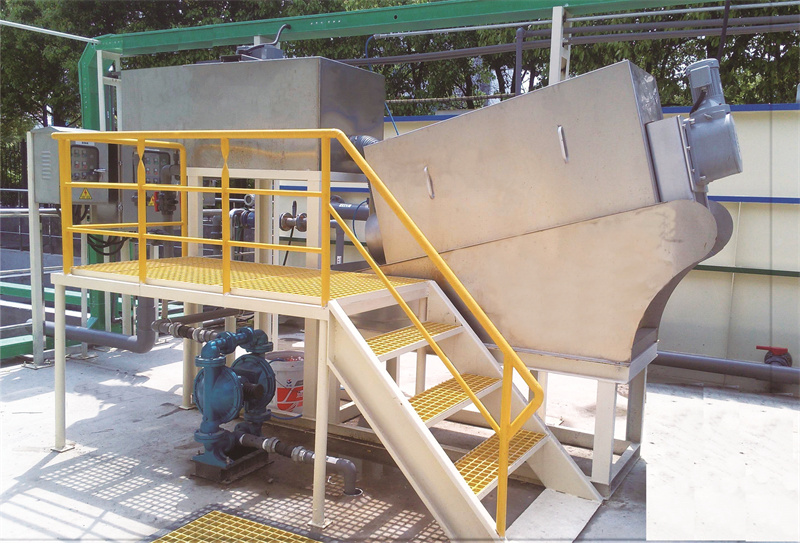
Sludge dewatering machines are core special equipment for realizing sludge volume reduction, harmless treatment and resource recovery in wastewater treatment systems, widely applied in solid-liquid separation of sludge generated from municipal sewage, industrial wastewater, livestock breeding, papermaking, chemical and other industries. This paper systematically analyzes professional application solutions of sludge dewatering machines from five dimensions including working principle, mainstream models, key selection criteria, operation & maintenance specifications and application value, providing authoritative references for engineering equipment selection and efficient machine operation.
I. Core Working Principle of Sludge Dewatering Machines
Adopting physical separation technology, sludge dewatering machines process fluid sludge with moisture content above 95% through procedures including flocculation conditioning, gravity thickening, mechanical pressing / centrifugal separation to rapidly remove free water and interstitial water. The final moisture content of sludge is reduced to 60%–85%, achieving massive sludge volume reduction and facilitating subsequent transportation, disposal and resource utilization.
The core mechanism of the equipment is forced solid-liquid separation: sludge particles are agglomerated by chemical flocculation first, then efficient solid-liquid separation is realized via mechanical pressure, centrifugal force or filtering gaps between stacked discs. The whole process produces no secondary pollution with stable and controllable dewatering efficiency.
II. Comparison & Applicable Scenarios of Mainstream Sludge Dewatering Machine Models
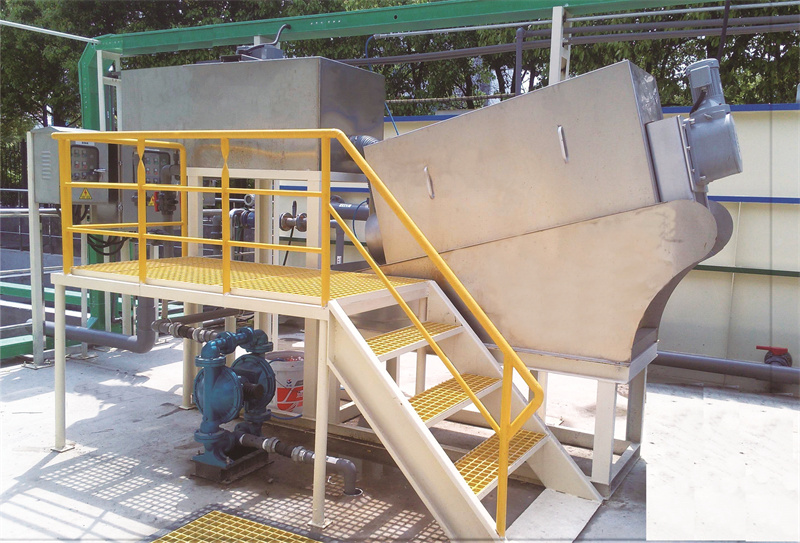
1. Multi-Disk Screw Sludge Dewatering Press
Constructed with stacked fixed rings and moving rings combined with a spiral shaft for material propulsion, it completes dewatering by gravity thickening and internal pressure. It features anti-clogging performance, low energy consumption and low noise.
Applicable materials: low-concentration sludge, livestock breeding sludge, food processing sludge
Advantages: small footprint, no frequent flushing required, low maintenance cost
Discharged sludge cake moisture content: 75%–85%
2. Belt Filter Press
It operates continuously in three stages: gravity dewatering, wedge pre-pressing and multi-stage roller pressing, featuring large processing capacity and stable operation.
Applicable scenarios: municipal wastewater treatment plants, papermaking sludge, large centralized sludge treatment projects
Advantages: continuous operation, high automation level, moderate energy consumption
Discharged sludge cake moisture content: 70%–78%
3. Plate-and-Frame Sludge Filter Press
High-pressure hydraulic squeezing inside sealed filter chambers delivers deep dewatering performance with the lowest sludge cake moisture content.
Applicable materials: high-concentration industrial sludge, hazardous waste sludge, projects requiring deep dewatering
Advantages: low cake moisture content, thorough solid-liquid separation, low flocculant dosage
Discharged sludge cake moisture content: 60%–70%
4. Decanter Centrifuge Sludge Dewaterer
High-speed rotation generates centrifugal force to separate solid and liquid, with fully sealed operation to avoid odor leakage.
Applicable materials: oily sludge, municipal sludge, projects with limited site space
Advantages: ultra-small footprint, high processing efficiency, no filter cloth consumption
Discharged sludge cake moisture content: 65%–75%
III. Key Factors for Sludge Dewatering Machine Selection
Sludge property matching: Select models based on sludge moisture content, organic matter proportion and particle size. Plate-and-frame presses are preferred for high-concentration sludge, while screw presses suit low-concentration sludge prone to blockage.
Processing capacity matching: Specify equipment model according to daily sludge output to avoid overloading small machines or idle waste of large machines.
Site & environmental compliance: Sealing performance, noise reduction and floor space must meet on-site requirements; centrifugal and screw presses are more suitable for indoor fully enclosed workshops.
Operating cost calculation: Evaluate comprehensive costs including energy consumption, chemical dosage, wear part replacement and manual maintenance to select the most cost-effective solution.
IV. Daily Operation, Maintenance & Troubleshooting of Sludge Dewatering Machines
Routine O&M Key Points
Regularly clean filter cloth / stacked discs to prevent clogging and reduced dewatering efficiency
Inspect bearings, sealing components and hydraulic systems, replace aged parts timely
Control the dosage ratio of flocculants to improve sludge agglomeration effect
Complete no-load trial run before feeding sludge to avoid equipment overload
Common Fault Handling
Sludge leakage: adjust belt tension, check filter cloth damage, optimize flocculant dosage
Equipment clogging: increase flushing intensity, reduce feed sludge concentration, clean spiral shaft / filter chambers
Excessively high cake moisture: raise pressing pressure, extend dewatering duration, optimize flocculation process
V. Industrial Application Value of Sludge Dewatering Machines
As key end-of-pipe equipment in wastewater treatment, sludge dewatering machines directly determine overall sludge treatment efficiency:
Volume Reduction: sludge volume cut by over 70%, greatly lowering transportation and landfilling costs
Harmless Treatment: pathogen content in dewatered sludge decreases to meet environmental disposal standards
Resource Recovery: dewatered sludge can be used as raw materials for building materials, organic fertilizer production and incineration power generation to realize circular resource utilization
Conclusion
Sludge dewatering machines with proper model selection and standardized maintenance serve as core guarantees for wastewater treatment plants to achieve compliant discharge, cost reduction and efficiency improvement. Precise equipment selection based on sludge characteristics, treatment scale and on-site conditions, plus strict daily maintenance procedures, can fully maximize machine performance, support efficient delivery of environmental projects and boost green and sustainable development of the sludge treatment industry.
Related Products
Related News
- 汉中市New Trends in the Development of the MBR Membrane Wastewater Treatment Industry: A Professional Guide to Selecting Source Manufacturers
- 汉中市How to Select Wastewater Treatment Equipment for Pig Farms? In-depth Review of Trusted Industry Service Providers
- 汉中市Hard-to-Treat Slaughterhouse Wastewater? Tested & Recommended High-Adaptability Wastewater Treatment Solutions for 2026
- 汉中市How to Select Integrated Wastewater Treatment Equipment? In-depth Review of Trustworthy Source Manufacturers Recognized by Industry Insiders
- 汉中市How to Select Buried Integrated Wastewater Treatment Equipment? Strength Evaluation of Reliable Brands in 2026
- 汉中市Inventory of New Coal Mine Water Treatment Technologies! How to Select Cost-Effective Manufacturers & Avoid Common Pitfalls
- 汉中市Textile Printing & Dyeing Wastewater Treatment Is Tough? These Four Powerful Enterprises Easily Solve Core Industry Pain Points
- 汉中市Authoritative Evaluation of High-Salinity Wastewater Treatment Equipment | Top Recommended Brands of 2026
- 汉中市Which Supplier Offers Reliable Integrated Sewage Treatment Equipment? Multi-dimensional Actual Test Comparison & Top Recommended Brands Released
- 汉中市Electroplating Factory Wastewater Treatment Engineering Cases
About Us
products
Business
News
Contact Us
Service Hotline:+86-15253659088WhatsApp: +86 18706508001
Email: jly@haipuou.group
Address: No.56, Donghuan Road, Zhucheng City, Weifang City, Shandong Province, China